
WELL Blog
Notes on light, perception, and the experience of space
Biological Clock and Healthy Lighting Design
As we step into a new year, we're all excited to turn the page, setting goals like exercising more or eating cleaner. But there's one critical thing most of us overlook: our biological clock..
How about adding something free, effective, and genuinely system-changing to this year's goals? As a lighting designer, let's look beyond "what" you do this year — and change your relationship with light, meaning "when" you do it.
Healthy Lighting and the Biological Clock — Before You Reach for Supplements
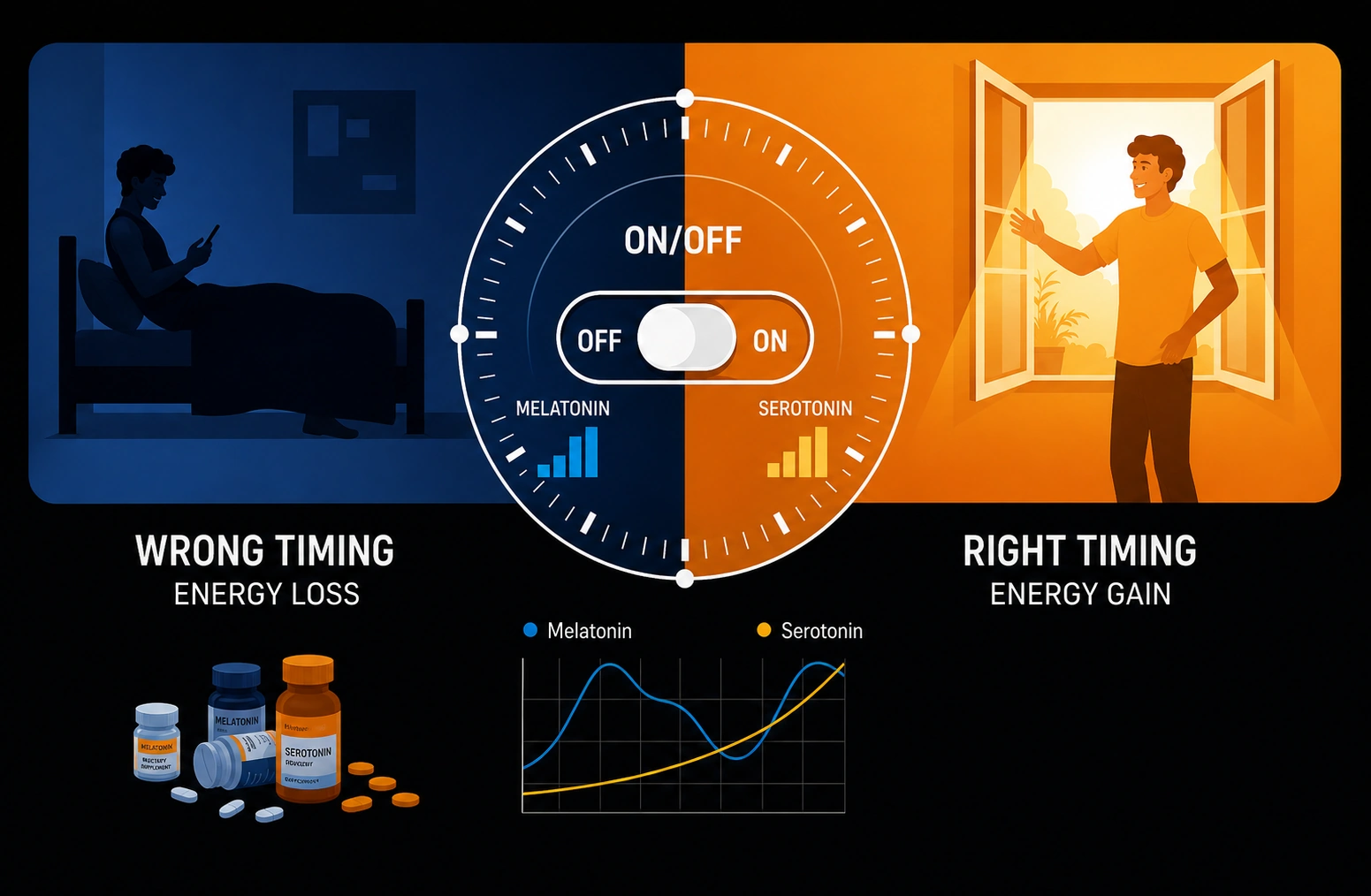
Before turning to vitamins or synthetic melatonin supplements to feel more energised in the new year, you should first activate your body's natural repair mechanism. The fatigue many of us experience isn't necessarily a result of ageing — it often stems from a biological clock that's out of sync with our environment, essentially a state of chronic jet lag.
Our bodies are a remarkable system synchronised with the sun. If this system isn't "set" correctly by the right light signal in the morning, the body's night shift — tissue repair and deep sleep — can't operate at full capacity. This is where Human-Centric Lighting comes in.
Cellular Recovery and Circadian Light Timing
Nutrition and exercise are, of course, important — but at the top of the body's operating hierarchy are physical signals, and light comes first among them.
As a lighting designer, I want to particularly emphasize this: one of the most valuable habits you can add to your new year routine is managing your lighting schedule in line with your circadian rhythm .
Hit "Start" With Morning Light
Exposure to daylight in the first few minutes after waking triggers the production process of melatonin — the hormone released at night and the key driver of cellular repair. Morning light with the right spectrum sends the "day has started" signal to the biological clock.
Because of permanent daylight saving time, starting the day in darkness can delay this signal — which in turn shows up as low energy, poor concentration, and reduced motivation throughout the day.
Mitochondrial Repair and Motivation
Lighting Design isn't just about seeing — it's about feeling.
- Cellular Protection: Melatonin is one of the most powerful antioxidants, protecting our mitochondria — the energy powerhouses of our cells. This protective shield is built by that very first light spectrum you're exposed to in the morning.
- Serotonin Conversion: Melatonin and serotonin are two sides of the same coin. As night-time melatonin gives way to daylight, it hands over to serotonin — our source of motivation. When your light cycle is disrupted, it's not just your sleep that suffers, but your zest for life too.
Practical Solutions for the New Year: A Healthy Lighting Protocol
In modern city life, starting the day immediately with screen light throws off our body clock. Adding this simple protocol to your 2026 goals can make a real difference:
- Start the Day with an Artificial Sunrise: If you're waking up before sunrise during the winter months, use wake-up lights at home that simulate a sunrise. When you wake, turn on the brightest, most powerful lights to send your brain a "wake up now" signal.
- Don't Skip Daylight: Spending time on your balcony after sunrise, or simply opening a window and looking outside for 10 minutes, works faster than most supplements.
- Time Your Sunglasses: In the early morning hours, let natural light signals reach your eyes (while still protecting your eye health).
- Evening Discipline: Dial down artificial lighting as bedtime approaches. Avoid cool white lights with high blue-wavelength content, which suppress melatonin production, and opt for warmer-toned lighting instead.
Conclusion: A Year in Sync with Your Biological Rhythm
Well-timed light exposure can be a more powerful healer than many of the supplements we take. When your body receives the right light signal, it already has the capacity to repair itself.
Understanding the relationship between the biological clock, circadian rhythm, and healthy lighting design has a direct impact on quality of life, performance, and overall wellbeing.
If you'd like to bring not just discipline, but biological intelligence, to your new year goals, get in touch with us to learn more about circadian-responsive lighting strategies.
References:
- CIE TN 011:2020 – Human Centric Lighting in the Workplace
Technical guideline by the International Commission on Illumination (CIE) on human-centric lighting and workplace environments.
https://cie.co.at/publications/human-centric-lighting-workplace -
Lighting Research Center – Healthy Buildings Program
Academic studies examining the effects of light on circadian rhythm, biological impact, and indoor health.
https://www.lrc.rpi.edu/resources/newsroom/lightinganswers/healthy.asp -
International WELL Building Institute – Light Concept
Reference document outlining the biological, visual, and health criteria for light within the WELL Building Standard.
https://www.wellcertified.com/feature/light -
Sleep Medicine Reviews – Circadian Rhythms & Melatonin
Scientific paper examining the relationship between melatonin production, circadian rhythm, and light exposure.
https://www.sciencedirect.com/science/article/abs/pii/S1087079216301324 -
EN 12464-1 – Lighting of Work Places
European standard defining lighting criteria for workplaces — a key reference for educational and office environments.
https://standards.cencenelec.eu/dyn/www/f?p=205:110:0::::FSP_PROJECT:44503
Well-planned light doesn't just transform a space — it transforms the experience within it.
If you'd like to integrate the Human-Centric Lighting approach into your projects, get in touch with us. .
Let's add value to your projects with light!
WELL Lighting Design develops lighting design projects that are human-centered, sustainable, and enhance the character of spaces.
Contact us to add value to your projects.
well@well-lighting.com
+90 555 239 82 83
Cekmekoy, Istanbul
FOLLOW US!
© 2026 WELL Lighting Design