
WELL Blog
Notes on light, perception, and the experience of space
The Role of Human-Centeric Lighting in Healthcare Architecture
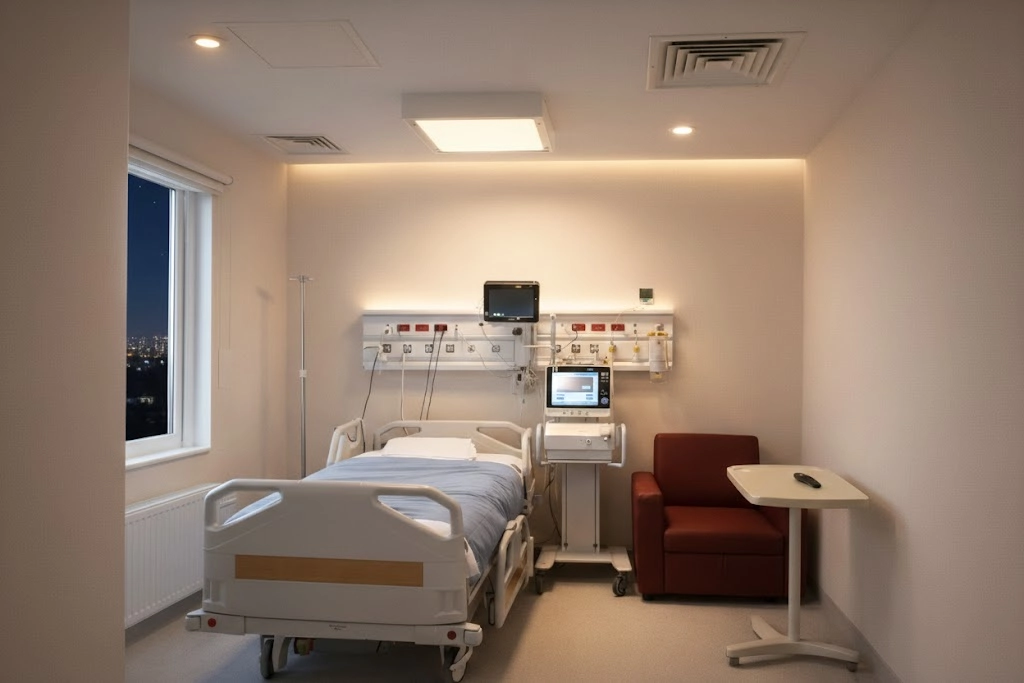
ın countries where human health and wellbeing are prioritized in architecture, healthcare design has embraced a holistic approach — one that encompasses not only physical recovery but also psychological and physiological balance. At the center of this shift is Human-Centric Lighting , long regarded as a purely visual necessity but now recognised as a therapeutic tool in its own right.
Healthcare institutions are increasingly turning to Human-Centric Lighting (HCL) strategies, driven by growing scientific evidence of light's effects on human biology. So why is lighting such a critical factor in modern hospital design?
The Physiology of Light: Supporting Circadian Rhythm
As SmithGroup lighting expert Matt Alleman has noted, designers can now directly link lighting design to patient outcomes — a shift that has fundamentally changed the way the industry approaches the subject.
Advanced systems used in intensive care units, post-anaesthesia care units (PACU), and clinical rooms with limited access to daylight simulate the 24-hour natural light cycle. These applications support circadian rhythm, helping to keep the body's biological clock in balance.
EN: Scientifically calibrated spectral lighting:
- Regulates the release of melatonin and cortisol salınımını düzenler
- Influences body temperature and blood pressure balance
- Reduces stress levels
- Improves mood
In particular, for stroke patients or individuals experiencing post-operative delirium, lighting scenarios that reinforce a sense of time contribute meaningfully to clinical recovery.
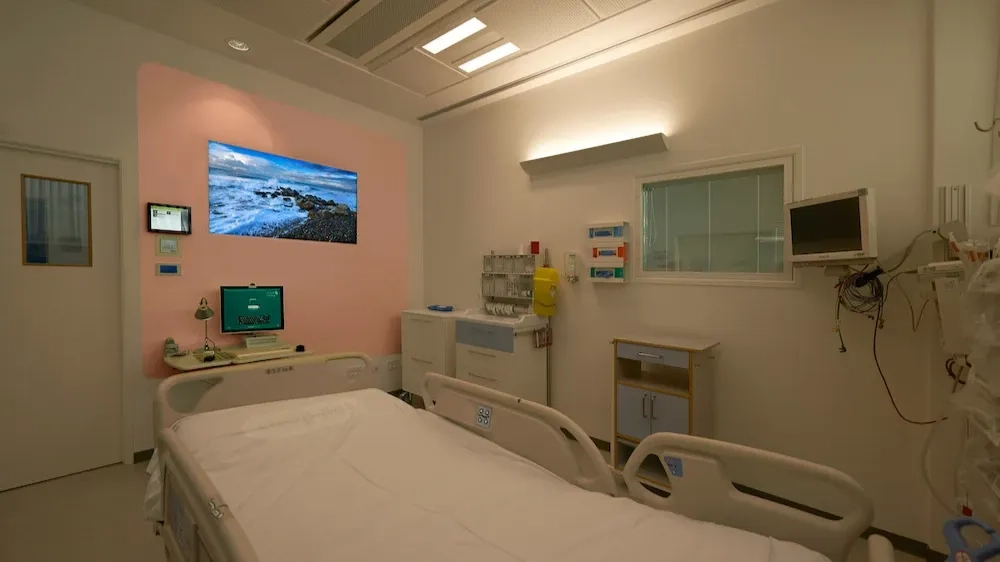
Patient Autonomy and Zonal Lighting
As Sheri Teymouri and Karen Murphy of HDR have highlighted, modern hospital lighting is also about control and personalization. A single lighting scenario does not suit everyone.
This is where zonal strategies come in:
Patient Zone:
Individual comfort enabled through controls integrated into the bed unit.
Staff Zone:
Task lighting that doesn't disturb the patient, along with amber-toned night lights.
Visitor Zone:
A warmer, more comfortable atmosphere for family members. This zoning approach gives patients a sense of control over their environment, contributing psychologically to the recovery process.
Safety and Aesthetics in Behavioural Health Settings
Behavioural health units are among the most sensitive areas in lighting design.
As Ryan Conover of The Lighting Practice has noted, a careful balance must be struck between safety and aesthetics in these spaces.
While using anti-ligature and impact-resistant fixtures, designers must avoid creating an institutional, clinical atmosphere. Artificial skylights and panels that simulate daylight make circadian support possible without compromising safety.
Conclusion:
Healthcare architecture continues to evolve at the intersection of technology and medicine. Lighting is no longer used simply to make spaces visible — it is now applied to support biological rhythm, reduce stress, and accelerate the healing process.
Our goal is to make this approach an integral part of healthcare architecture, standardising it across every domain — from surgical units to behavioural health.
Light can be as powerful a healer as medicine itself.
Well-planned light doesn't just transform a space — it transforms the experience within it.
To add value to your projects through healthy lighting design, get in touch with us. .
References:
Let's add value to your projects with light!
WELL Lighting Design develops lighting design projects that are human-centered, sustainable, and enhance the character of spaces.
Contact us to add value to your projects.
well@well-lighting.com
+90 555 239 82 83
Cekmekoy, Istanbul
FOLLOW US!
© 2026 WELL Lighting Design